
Travertine Tile Sealing & Restoration
(407) 392-0888
Travertine Tile Sealing in Orlando: How Often, Which Sealer, and What to Expect
Travertine is a beautiful, porous natural stone. In Central Florida’s UV, rain, and pool environment, sealing keeps stains, algae, and moisture out while preserving color and texture. Outdoors, most travertine in Orlando benefits from resealing every 2–4 years; indoors, every 3–5 years is typical. If water no longer beads, color looks patchy, or algae returns quickly, it’s time. (We confirm with a simple water-droplet test.)
Which sealer? For travertine, we use penetrating/impregnating sealers that soak in and protect without creating a slippery film. Choose natural-look for a matte, unchanged appearance—or an enhancing penetrator to subtly deepen color. Around saltwater pools, we specify sealers formulated for salt and UV resistance. We avoid topical “wet-look” coatings on travertine because they can alter the finish and trap moisture.
Our process (AAA Paver Sealing):
- Deep clean & neutral rinse (no acids).
- Repairs & grout/sand stabilization where needed.
- Moisture check, then controlled-humidity application of the selected penetrating sealer.
- Optional non-slip additive for wet areas.
- Final bead test, cure window briefing, and a care plan.
Care between reseals: Clean with pH-neutral products, squeegee standing water, and spot-treat spills promptly. We’ll re-evaluate annually; most outdoor pool decks in Orlando stay protected 2–4 years per application, depending on sun and splash exposure.
Get a local, travertine-specific plan: Book a free assessment—AAA Paver Sealing will test, specify, and apply the right system for your stone and setting.
Maintain Your Tile Color
Sealing your tile gives it a new and shiny look. It enhances the natural beauty of the stone and can almost make it look richer or more vibrant. Glossy or polished may also be available.

Why is it Important to seal your travertine tile?
It is important to understand that travertine is a porous stone, and if not properly sealed and maintained, it can be susceptible to staining, water damage and algae growth
- Stain resistance: Travertine is a porous natural stone, which means it has tiny holes and spaces within its structure. These pores can absorb liquids and substances, leading to staining and discoloration. Sealing the travertine helps to create a protective barrier on the surface, reducing the stone’s porosity and making it less susceptible to staining. It allows spills to sit on the surface rather than seeping into the stone, making it easier to clean and maintain the tile’s appearance.
- Moisture protection: Travertine can be sensitive to moisture, especially in outdoor or wet environments. Sealing the tile helps to minimize water absorption and moisture penetration, reducing the risk of damage, such as cracking, flaking, or warping. By creating a barrier, the sealer helps to preserve the structural integrity of the travertine and prolong its lifespan.
- Durability enhancement: Sealing can enhance the overall durability and strength of travertine tile. It helps to protect the stone from wear and tear caused by foot traffic, abrasion, and impact. The sealer acts as a shield, reducing the chances of scratches, etching, and other surface damage.
- Easy maintenance: Sealed travertine tile is generally easier to clean and maintain. The protective layer created by the sealer prevents dirt, grime, and other contaminants from penetrating the stone, making it simpler to remove surface debris and maintain the tile’s appearance over time.
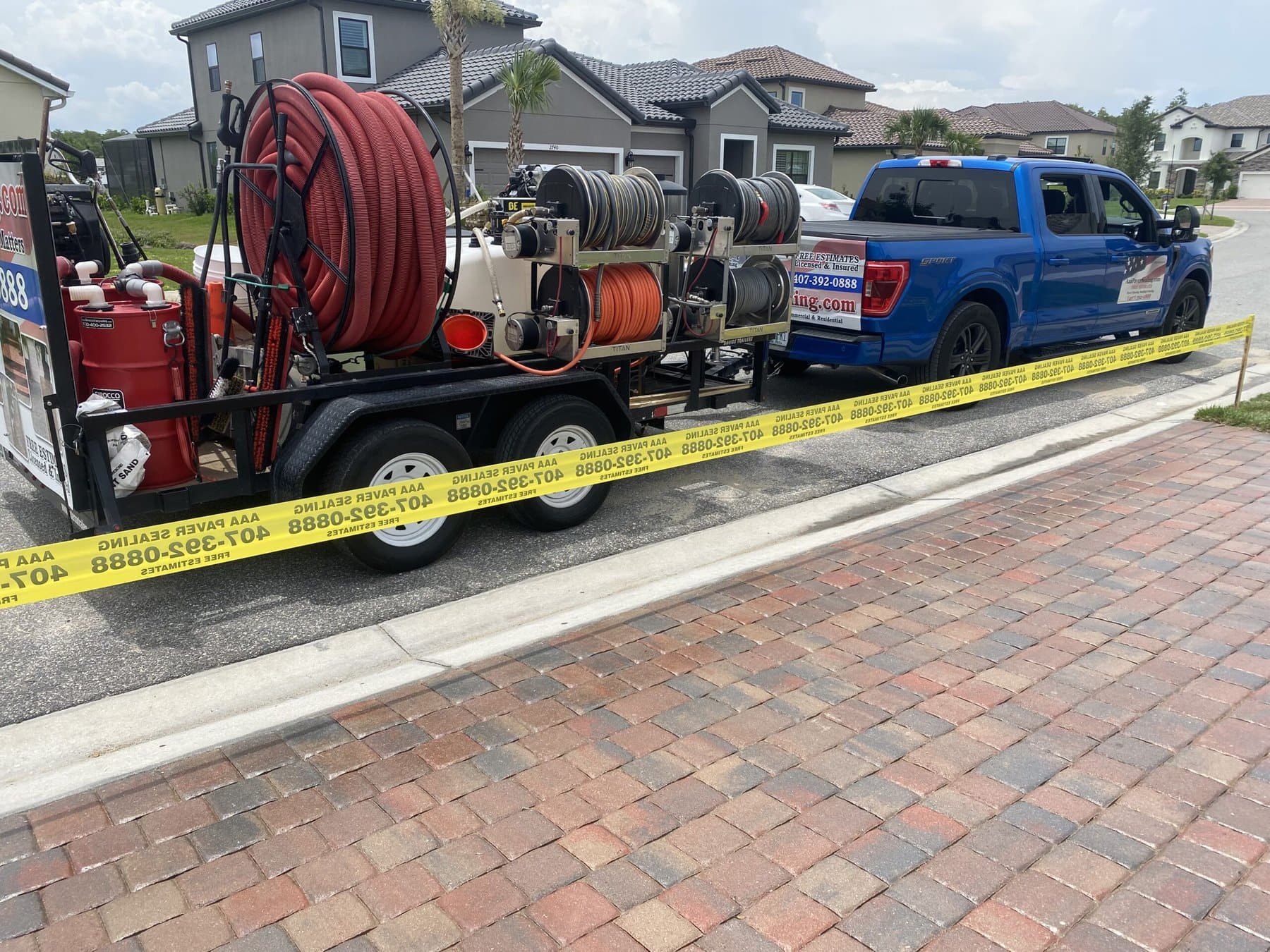
AAA Paver Sealing
Call Us Today at 407-392-0888
Licensed, insured and with years of experience
AAA Paver Sealing is dedicated to providing top-quality pool deck sealing services to its clients in Florida, including Orlando. Our team of experts uses only the best materials and techniques to ensure the best results.
Service Areas